What refacing actually includes
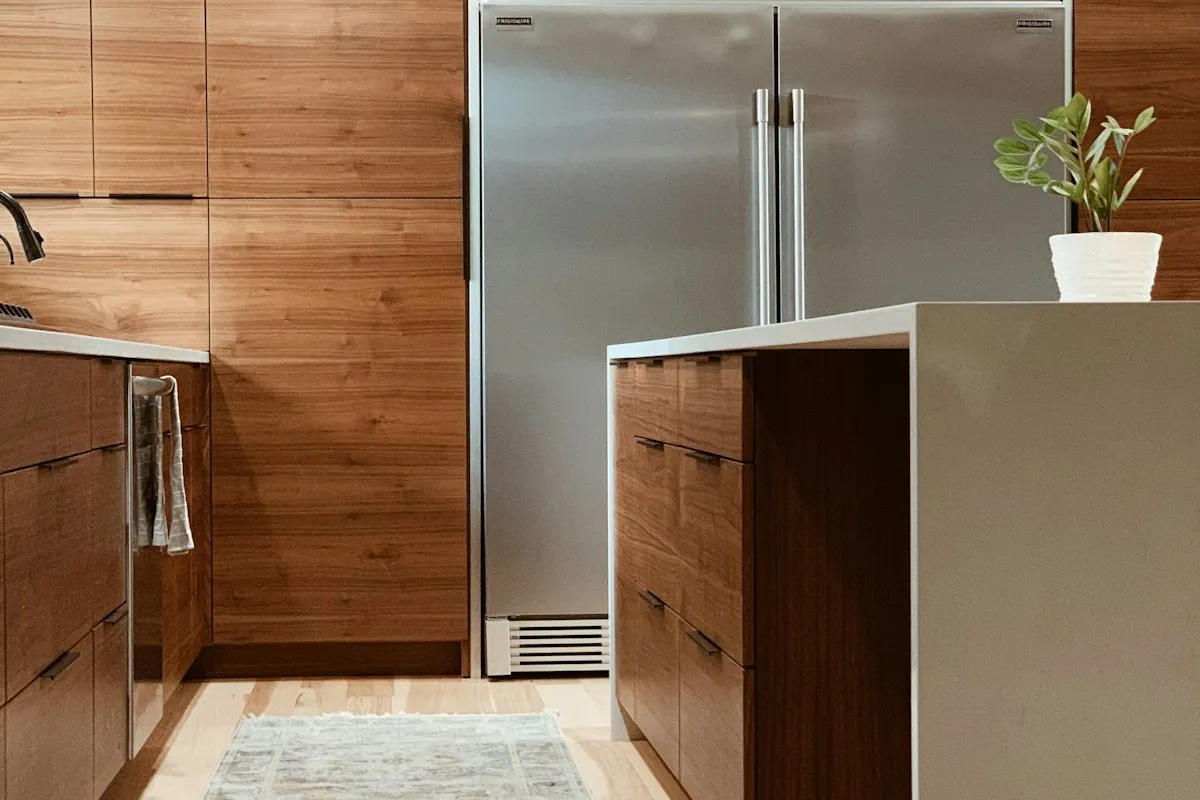
Cabinet refacing replaces every visible surface of a cabinet while keeping the box. In practice that means new doors, new drawer fronts, new hinges, a veneer or rigid laminate skin bonded to the face frames including the inside edges of the openings, and new toe kick and end panel coverings. Most refacing jobs also replace drawer boxes, add soft close hardware and fit roll-out shelves inside existing base cabinets, because the boxes are open and it is cheap to do while everything is apart.
What refacing does not include is any change to the carcasses, the cabinet sizes or the layout. That is the whole trade-off, and everything on this page follows from it. If the boxes are sound and the layout works, refacing is excellent value. If either is untrue, refacing spends real money making a problem look newer.
The four tests, in the order they should be run
One: the sink base floor
Open the cabinet under the kitchen sink and press the floor with your thumb near the back corners. If it gives at all, or if the surface is stained, lifting or swollen, the box is particleboard and it has been wet. On the Gulf Coast this is the single most common cabinet failure. The USDA Forest Products Laboratory recommends an 11 percent in-service moisture content for interior woodwork here against 8 percent nationally, and a supply line that weeps slowly in that environment goes unnoticed for a very long time.
A soft sink base does not automatically kill a refacing project. It does mean that cabinet has to be replaced, which means matching a new box into an old run, and it means asking whether the same thing is happening in the dishwasher cabinet next to it.
Two: shelf sag
Sight along each shelf from one end. A permanent curve means the shelf material is particleboard or melamine and the span was always too long. Shelves are easy to replace and cheap, so this is not fatal on its own, but it tells you what the rest of the cabinet is likely made of.
Three: box corners and joints
Look at the back corners inside the cabinets and at the bottom edges of the end panels. Swelling, delamination or a fuzzy, softened edge all indicate the same thing: moisture has been in the core. Also pull a drawer right out and look at the corner joints. Stapled butt joints that have opened up are a sign of the construction standard throughout.
Four: the layout question
This is the test nobody wants to run, and it is the one that produces the most regret when it is skipped. Ask yourself whether the thing that irritates you daily is what the cabinets look like or where they are. If it is the dead corner, the missing pantry, the 9 inch filler or the fact that two people cannot work in the room at once, no refacing job will help. You will have spent four figures locking in exactly the layout you dislike.
Choosing the new doors, which is the whole aesthetic decision
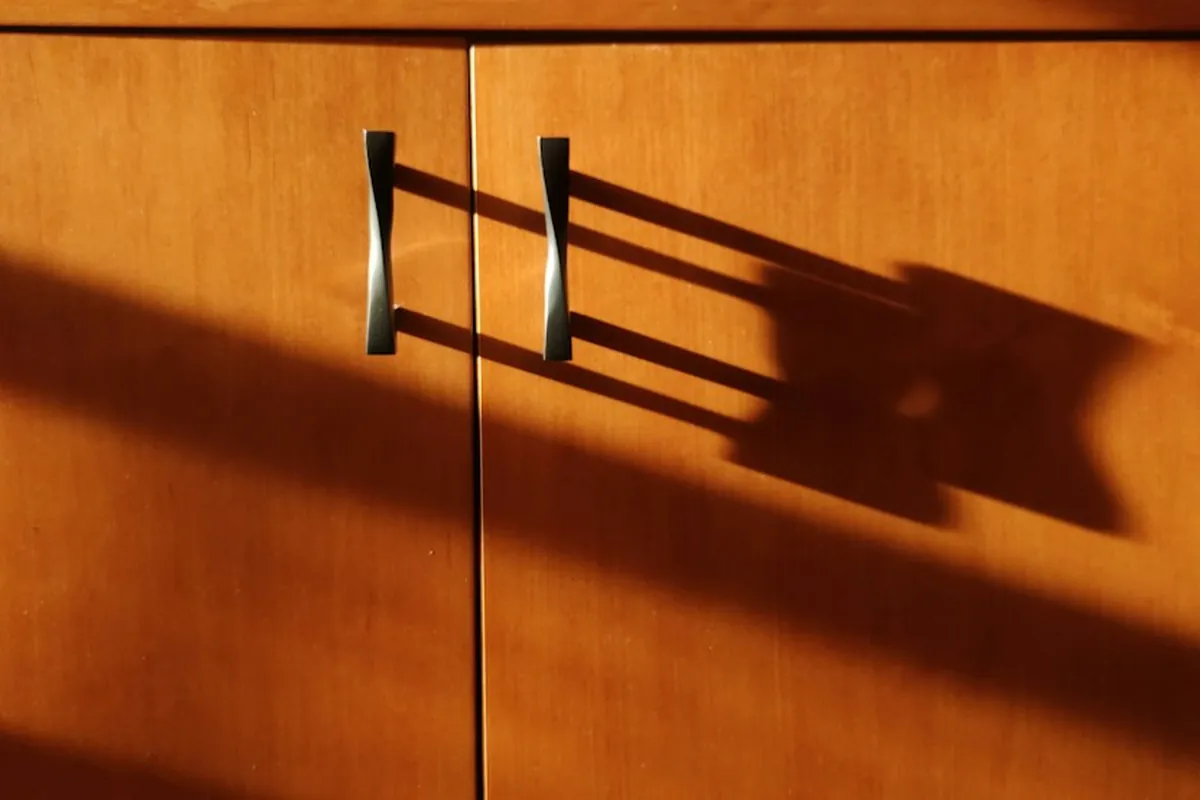
Because refacing keeps the openings, the door style and finish are the only variables you actually control. That concentrates the decision, which is a good thing: you are choosing between slab, shaker, recessed panel and raised panel, and between painted and stained, with no layout to distract you.
One constraint is worth knowing. Refacing normally keeps the existing overlay, because the overlay is determined by the face frame openings that are staying put. If the kitchen is partial overlay with a lipped door, moving to a full overlay look usually is possible; moving to inset generally is not, because inset needs consistent, square openings and an older face frame rarely provides them. The door styles guide covers all six styles and the overlay question in detail.
On the finish, a Mobile kitchen has a real argument on each side. Paint wipes clean and looks contemporary; stain moves with the wood and hides the seasonal shrink line at a panel edge that a painted five-piece door will eventually show. The painted versus stained guide goes through it with the climate numbers attached.
What to improve while the cabinets are open
The best value in a refacing job is often not the faces at all. With every door off and every box accessible, this is the cheapest moment in a kitchen's life to fix the interiors.
- Roll-out shelves in deep base cabinets, which turn a kneel-and-reach cabinet into a drawer.
- New drawer boxes, dovetailed and on full extension undermount slides, in place of stapled boxes on side-mount slides.
- A pull-out waste unit, which is the single fitting people use most and miss most.
- A corner mechanism in a blind corner, which is the only way to reach that volume at all.
- Soft close hinges throughout, which are a hardware specification and nothing to do with the door.
- New shelf pins and adjustable shelving where the existing shelves were fixed.
- Under-cabinet lighting, since the undersides are accessible with the doors off.
The fittings guide goes through what each of those costs you in cabinet volume and which ones people are still using three years later.
What refacing costs, and why we will not print a single number
There is no published dataset that prices cabinet refacing reliably and separately, and we are not going to invent one. What we can do is describe the shape of the cost honestly and give you the published replacement figures to compare against.
Refacing buys you doors, drawer fronts, hinges, veneer or laminate, preparation and labour. It does not buy carcasses, carcass installation, countertop removal and refitting, or any plumbing and electrical work. Against replacement, HomeAdvisor's national installed figures as of 17 June 2026 are $500 to $1,200 per linear foot for custom, $150 to $650 for semi-custom and $100 to $300 for stock, and Thumbtack's 8 July 2026 figures put custom at $500 to $1,400 and up. Refacing sits well below all of those, and the gap is widest on a kitchen with many cabinets and a simple layout.
| Line | Refacing | Replacing |
|---|---|---|
| Doors and drawer fronts | Yes | Yes |
| Hinges and hardware | Yes | Yes |
| Face frame veneer or laminate skin | Yes | Not applicable |
| New cabinet boxes | No | Yes |
| Carcass removal and installation | No | Yes |
| Countertop removal and refitting | Usually no | Usually yes |
| Plumbing and electrical disconnection | Usually no | Often yes |
| Layout change | Not possible | Possible |
Scope comparison rather than a price list. Published replacement figures are HomeAdvisor, 17 June 2026, and Thumbtack, 8 July 2026. No publisher produces a reliable separate national figure for refacing.
The refacing versus replacing guide works the whole decision through in detail, and the cost guide carries every published figure with its source.
Refacing, painting, or new doors only
Three services get confused with each other constantly, and they are not interchangeable.
Painting and refinishing keeps everything and changes the colour. It is the cheapest of the three and the one most often done badly, because preparation is most of the work and it is invisible when it is skipped.
New doors and drawer fronts only changes the fronts without skinning the face frames. It suits a kitchen where the frames are in good condition and a finish that will match the new doors already exists, or where the frames are going to be painted.
Refacing does both: new fronts and a new face frame surface, so the whole visible cabinet matches. It is the right answer when the frames are tired or the existing finish cannot be matched.
Refacing across Mobile County and the Eastern Shore
Refacing tends to suit houses from roughly the 1980s onward, where the cabinet boxes are plywood or sound particleboard and the layouts are already open-plan. That describes a great deal of Daphne, Spanish Fort and Saraland. In Mobile's older neighbourhoods and in the historic parts of Fairhope, kitchens have often been remodelled more than once and the question is more frequently whether the last remodel's boxes are worth a second life.
Full service area, and a free assessment starts on the contact page.