Saraland, AL: a city built in stages
Saraland had 16,171 residents at the 2020 census, up 20.6 percent from 13,405 in 2010. It covers 32.37 square miles in Mobile County, about 9 miles north of downtown Mobile on US Route 43, and is bordered by Prichard, Chickasaw and Satsuma. Interstate 65 and US 43, locally Saraland Boulevard, are the primary north to south corridors.
The growth history is the useful part. The city incorporated in 1957 with just 125 residents, reached 4,595 by 1960 and 9,833 by 1980, then climbed steadily to its present figure. The name reportedly comes from C.J. DeWitt, a retired minister and editor who moved south in 1890 and opened the first post office in 1895, naming it after his wife Sara.
In June 2006 residents voted to separate from the Mobile County Public School System, and Saraland City Schools began operating in autumn 2008. A city running its own school district is a reliable indicator of the kind of settled, owner-occupied housing market that produces steady remodelling work rather than churn, which is exactly what shows up in the cabinet enquiries from here.
Three housing eras, three different cabinet jobs
Saraland's growth curve left three distinct waves of housing, and the honest advice changes between them. This is the one place in the service area where asking what decade the house was built genuinely changes the first recommendation.
| Era | Typical condition | Usual first recommendation |
|---|---|---|
| 1950s and 1960s | Small kitchens, original layout, walls have moved | Custom cabinetry, and a layout conversation before anything else |
| 1970s and 1980s | Larger rooms, often original or once-remodelled cabinets | Check the boxes. Refacing if sound, replacement if the sink base has gone |
| 1990s and 2000s | Square rooms, plywood or good particleboard boxes | Refacing, new doors, or semi-custom replacement |
| 2010 onward | Built square and level, modern boxes | Semi-custom, or custom where the ambition is layout rather than geometry |
Grouping based on the city's published growth history. The test that overrides all of it is the condition of the sink base, which decides refacing against replacement regardless of decade.
The mid-century houses
Kitchens from the 1950s and 1960s in this market tend to be small, closed off and laid out for a way of cooking nobody does any more. Those rooms need a layout conversation before a cabinet conversation, because no amount of new cabinetry fixes a kitchen you cannot open the refrigerator in. They also need the full older-house toolkit: walls measured at three heights, cabinets levelled to a laser line struck from the floor's high point, tapered fillers and scribes at every wall junction. The custom cabinets page sets that out in full.
The 1970s to 1990s houses
This is the largest group and the one where refacing is most often the right answer, because the boxes from that era are frequently still sound and the layouts are already open enough. The test is the one on that page: press the sink base floor near the back corners, check the shelves for sag, look at the box corners for swelling, and ask honestly whether the layout is one you would choose again. Pass all four and refacing is excellent value. Fail the first and you are into replacement.
The newer houses
Square rooms, plumb walls, and a serious opportunity in storage rather than in the kitchen itself. Garage cabinets and laundry and mudroom runs get more use per dollar in a newer Saraland house than another run of kitchen uppers does.
Still inside the coastal zone
Nine miles inland from downtown Mobile does not get you out of the specification. Wood Handbook FPL-GTR-282, Table 13-2, sets the recommended in-service moisture content for interior woodwork at 11 percent in the damp, warm coastal area against 8 percent across most of the United States, and the Handbook's own map places the whole Mobile area inside that band.
NOAA's 1991 to 2020 normals for Mobile Regional Airport, which is the closest long-record station to Saraland, give 66.15 inches of annual precipitation, a July normal of 7.25 inches, and a mean dew point of 72.0 degrees on 15 July against 39.4 degrees on 15 January. Cabinet stock leaves the kiln at 6 to 8 percent moisture content, so the same gap applies here as anywhere else on this coast.
Garages, which Saraland has more of
Detached and attached garages are common across the city's newer housing, and garage cabinetry is a bigger share of the work here than it is on the Eastern Shore. The specification for a Mobile County garage is genuinely different from indoor cabinetry: the space is unconditioned, so it sees the full 32.6 degree seasonal dew point swing with no air conditioning to flatten it, and the slab condenses moisture during humid spells.
That rules out bare particleboard and unsealed melamine entirely, and it makes wall-hung installation the default rather than an upgrade. The garage cabinets page ranks the materials that actually survive and sets out the layout constraints, including the one people forget: measure the lowest point of the open garage door before anything is fixed to a wall.
A city that grew from 125 people
Saraland's growth curve is unusual enough to be worth setting out properly, because it explains the housing. The city incorporated in 1957 with 125 residents. By 1960 it had 4,595. By 1980 it had 9,833. At the 2020 census it had 16,171, up 20.6 percent from 13,405 in 2010.
That is not one growth spurt, it is six decades of steady addition, and steady addition produces a layered housing stock rather than a uniform one. A single street here can hold a 1960s ranch, a 1980s brick house and something built in the last ten years. It is the opposite of Spanish Fort across the bay, where almost everything arrived in the same twenty-five year window.
The name comes from C.J. DeWitt, reportedly a retired minister and editor who moved south in 1890 and opened the first post office in 1895, naming it after his wife Sara. The city sits across 32.37 square miles bordered by Prichard, Chickasaw and Satsuma, about 9 miles north of downtown Mobile.
The school district, and what it signals
In June 2006 residents voted to separate from the Mobile County Public School System, and Saraland City Schools began operating in autumn 2008. The district now runs early education, elementary, middle and high schools.
A city that votes to fund and run its own school district is a city with a settled, owner-occupied housing market, and that shows up directly in the kind of cabinet enquiries that come from here. The work tends to be homeowners improving a house they intend to stay in rather than pre-sale refreshes, which shifts the sensible advice toward doing the job properly once rather than toward the cheapest thing that photographs well.
I-65, US 43 and what they mean for a delivery
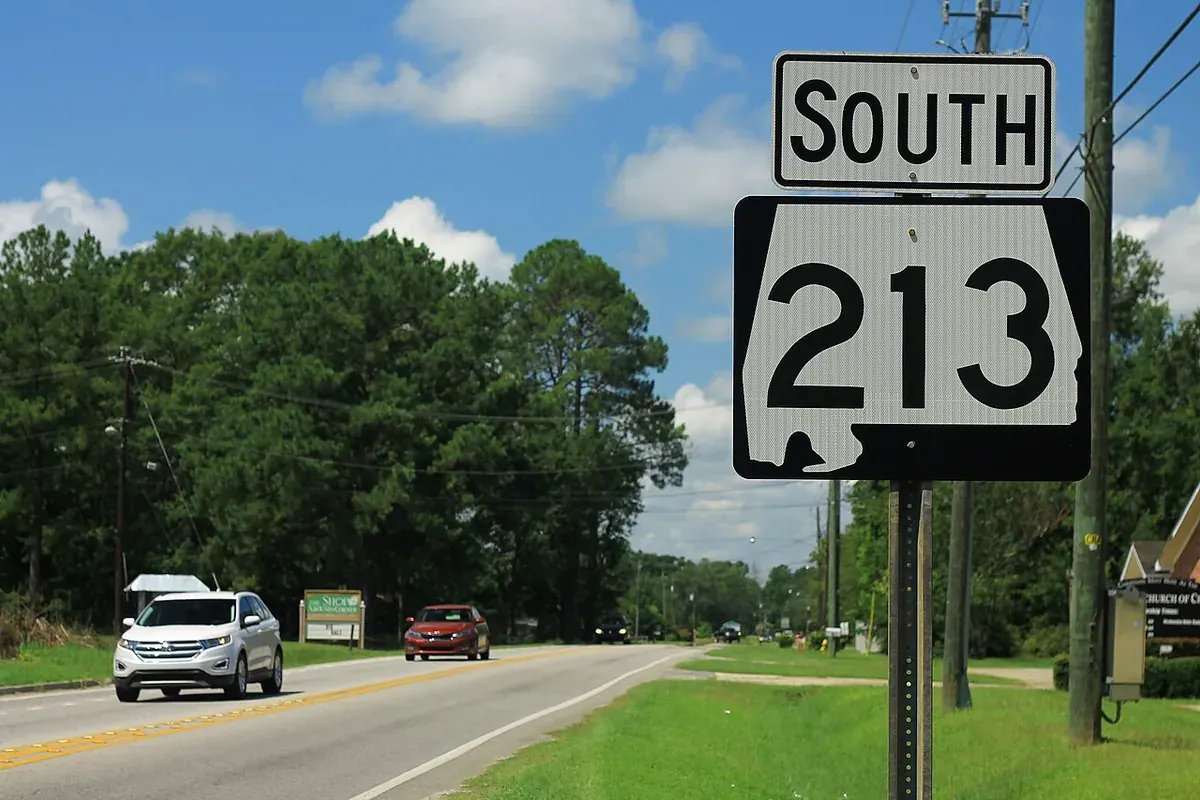
Interstate 65 and US Route 43, locally Saraland Boulevard, are the primary north to south corridors through the city, and Alabama 213 runs through it as well. Practically, Saraland is one of the easiest addresses in the service area to reach: nine miles of straight highway from downtown Mobile with no bay crossing and no bridge.
That matters for two things. Installation scheduling is simpler, because there is no causeway or coastal traffic in the way. And for anybody buying cabinets themselves and wanting only fitting, delivery logistics are straightforward, which is not true of a Gulf Shores condominium with a service lift booking.
Working in a 1960s Saraland kitchen
The mid-century houses here present the most interesting cabinet problems in the service area, and they are worth their own section because the answer is usually not what people expect.
Kitchens from that era are typically small, closed off from the living space, and laid out around a work pattern nobody uses now. They frequently have a single window over the sink, a doorway in an awkward position, and no pantry at all. The instinct is to replace the cabinets. The better first question is whether the room itself should change.
| Problem | Cabinet answer | Better answer |
|---|---|---|
| No pantry | A tall pantry cabinet in the run | Usually the cabinet answer is right here |
| Cabinets too shallow or too high | Rebuild to current dimensions | Cabinet answer is right |
| Room is closed off from the living space | None | Structural work first, then measure |
| Doorway in the middle of the best wall | Work around it | Consider moving the doorway before cabinets |
| Sink under the only window, badly placed | Work around it | Moving it is plumbing, so price it before deciding |
| Dead corner nothing reaches | A corner pull-out mechanism | Cabinet answer is right, and it is the biggest single gain |
Three of six problems are solved by cabinetry and three are not. Establishing which is which before collecting quotes saves the most money of anything on this page.
Where the room is staying as it is, these kitchens benefit enormously from the things that do not change the footprint: a corner mechanism in the dead corner, roll-outs in every deep base cabinet, a tall pantry where a wall allows one, and drawers instead of doors wherever possible. The fittings guide covers which of those get used three years later.
Permits and licensing in Saraland
Saraland is a municipality inside Mobile County and publishes its own permit applications, including mechanical, land disturbance and right of way permits, through the city website. City addresses therefore go through Saraland's own building department rather than through Mobile County Inspection Services.
On cabinetry specifically, Mobile County Inspection Services states that almost any work in Mobile County requires a permit and then lists exceptions including painting, redecorating, changing countertops and installing new cabinetry. The same logic applies at city level: the permit trigger is the plumbing, electrical, mechanical or structural work around the cabinets. Confirm with Saraland's department for an address inside the city.
Alabama's licensing rule is statewide. A residential home builder licence is required once the cost of the undertaking exceeds $10,000, with the Alabama Code defining cost of the undertaking as the total cost of materials, labour, supervision, overhead and profit. The permit and licensing guide quotes the statute and links every department in the region.
What cabinets cost in Saraland, AL
| Kitchen | Linear feet | Semi-custom $150 to $650 | Custom $500 to $1,200 |
|---|---|---|---|
| Mid-century galley | 13 ft | $1,950 to $8,450 | $6,500 to $15,600 |
| Ranch house L-shape | 22 ft | $3,300 to $14,300 | $11,000 to $26,400 |
| Newer open plan with island | 32 ft | $4,800 to $20,800 | $16,000 to $38,400 |
Our arithmetic against HomeAdvisor's national per linear foot ranges, 17 June 2026. No cabinet pricing dataset is published for Saraland, Mobile County or Mobile.
The cost guide carries every published figure with its publisher and date.
What we do in Saraland
All fourteen services. Kitchen cabinets, refacing and garage cabinets are the three most common requests here, in roughly that order. Vanities are the usual starting point in the mid-century housing, where the bathrooms are small and the plumbing is awkward.
Nearby: Mobile itself, 9 miles south, and across the bay Spanish Fort and Daphne. See the whole service area, or start at contact.